AI Summary
This guide covers what apartment and condo moves in the Seattle area require beyond packing: reserving a freight or service elevator window, getting a certificate of insurance to building management early, arranging truck parking or a loading dock, planning for stairs and long carries, and meeting condo HOA move rules. It also lists what to send before an estimate, when studio and one-bedroom moves are worth hiring for, and a moving day checklist.
Moving out of a house is mostly about the stuff. Moving out of an apartment or condo is about the building. Elevators, loading docks, parking, and management rules shape the day more than the number of boxes does.
This guide covers what our crews deal with on almost every apartment and condo move in Seattle, so you can get ahead of it before moving day.
Reserve the elevator first
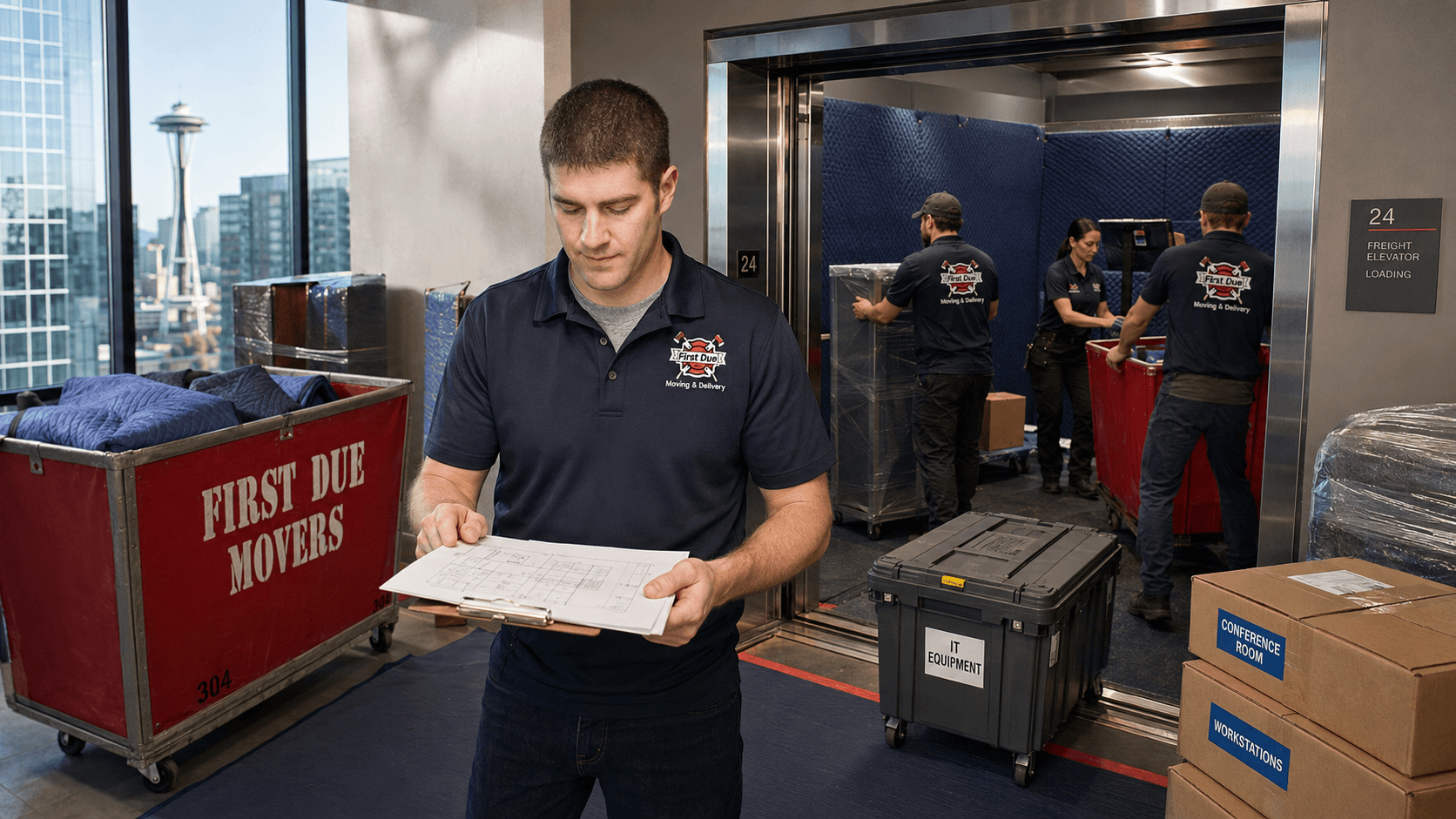
Most mid-rise and high-rise buildings in Seattle, Bellevue, and Kirkland require a reserved freight or service elevator window for moves. Popular slots go fast, especially at the end of the month and on weekends.
Book the elevator before you book us. Once you have the window, send it over so we can schedule the crew to arrive at the start of it, not halfway through. A two-hour elevator window with a crew that rolls up 45 minutes late is the most common way an apartment move runs long. That is not a problem you will run into with our crews, but if you go with someone else, it is worth asking how they handle arrival times before you hand over the elevator key.
Ask the building for:
- The exact elevator hours you are allowed to use
- Whether they pad the elevator or expect us to
- Where the crew should stage items while the elevator cycles
Get the certificate of insurance requirement early
Many condo associations and larger apartment buildings require a certificate of insurance (COI) from the moving company before they will let a crew in. Some also need the building owner or HOA listed as additionally insured.
This is routine for us, but it takes a day or two to process. Send the building's COI requirements to our team as soon as you have them and we will get the certificate over to management ahead of the move. If it waits until the day before, you risk a crew getting turned away at the door.
Know where the truck can park
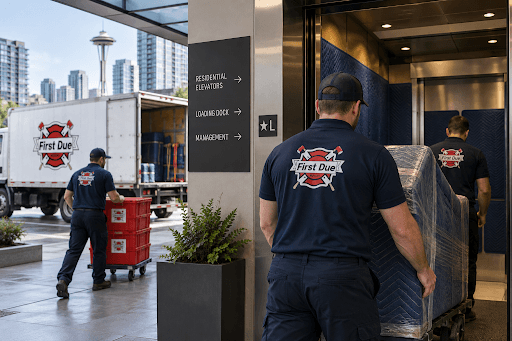
Downtown Seattle, Belltown, Capitol Hill, and South Lake Union rarely have a loading dock sitting open. Check with the building on:
- Whether there is a dock or loading zone and how to reserve it
- Height clearance on the garage or dock, since our box trucks will not fit in most residential garages
- Whether a temporary no-parking permit is needed on the street
If the truck has to park a block away, the crew is doing a long carry on every trip. Tell us that ahead of time and we will send the right crew size and equipment instead of finding out at 8 a.m.
Stairs, walk-ups, and long hallways
Older buildings in neighborhoods like Queen Anne, Wallingford, and Tacoma's North End often have no elevator at all. That is fine, but it changes the plan. Third-floor walk-ups take longer and are harder on furniture, so give us the floor number and whether there is an elevator when you request your estimate.
The same goes for long interior hallways or units far from the elevator. Every extra 100 feet of carry adds up across a full load, and we would rather plan for it than discover it.
Condo HOA rules to check
Condo moves come with a layer that apartments usually do not. Common HOA requirements include:
- Move-in and move-out fees or refundable deposits
- Restricted moving hours, often no weekends or after 5 p.m.
- Floor and wall protection requirements in common areas
- Advance notice to the management office, sometimes a week or more
Read the HOA move policy in full and forward it to us. Our crews bring FloorPro floor protection, floor runners, and moving blankets on every condo move, but we need to know if the building has its own rules about how common areas are protected.
What to send us before the estimate
Apartment moving quotes are more accurate when we know the building. When you request an estimate, include:
- Floor number and whether there is an elevator at both ends
- Elevator reservation window
- Parking and dock situation
- Any COI or HOA paperwork requirements
- Whether you want our packing services or plan to pack yourself
- Whether you need labor only help to load a rental truck or storage unit
Small apartment moves are often easier for us to schedule flexibly than full house moves. If your date can shift by a day, mention it. It can open up options.
Studio and one-bedroom moves
A common question is whether a studio or one-bedroom is worth hiring movers for. For a ground-floor unit with street parking, some people manage it with friends and a rental truck. For anything with an elevator reservation, a loading dock, or a walk-up, our crews usually finish in a fraction of the time and without the damage that comes from squeezing a couch through a stairwell.
If you only need the heavy lifting, our labor only service can load or unload your rental truck, POD, or storage unit.
Moving day checklist for apartments and condos
- Elevator reserved and window sent to us
- COI sent to building management and confirmed received
- Parking or loading dock arranged
- HOA move paperwork submitted and fees paid
- Boxes labeled by room and stacked near the door
- Hallway and unit clear of loose items
- Someone available at both buildings to meet the crew
Planning a move in the Seattle area?
First Due Movers handles apartment and condo moves across Seattle, Bellevue, Kirkland, Tacoma, and the surrounding area. Get a free estimate and include your building details so the crew arrives ready. Learn more about our movers in Seattle, WA, or explore our full range of moving services.
Written by
Jacob Axelson
Moving Specialist
Jacob brings firefighter values to every move: integrity, professionalism, and care for our customers and community.